NOVA Scientific Innovation Championship Championship
Ignite Scientific Innovation. Awaken the Dragon.
Foreword
The NOVA Scientific Innovation Championship (NSIC) is an integrated assessment framework designed to evaluate scientific proficiency, analytical thinking, and interdisciplinary problem-solving skills through an internationally aligned model.
Developed collaboratively by experienced educators, the framework reflects both global standards and practical insights into student performance. NOVA adopts a certification-based approach that evaluates demonstrated mastery across Physics, Biology, Astronomy, Integrated Science, and emerging fields like Bioengineering and Genetic Engineering.
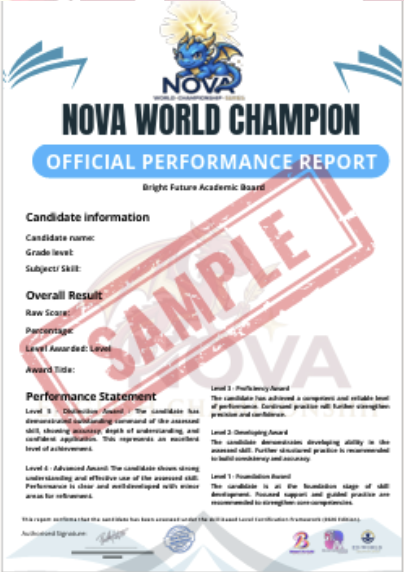
In addition to formal certification, each participant receives a detailed performance report outlining their results, proficiency level, and structured feedback to support continued academic development. NOVA therefore serves not only as a competition but as a transparent and measurable benchmark of scientific competence.



Academic committee boards
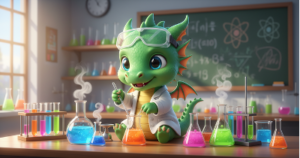
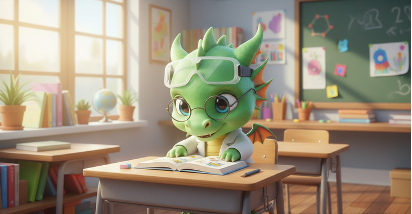
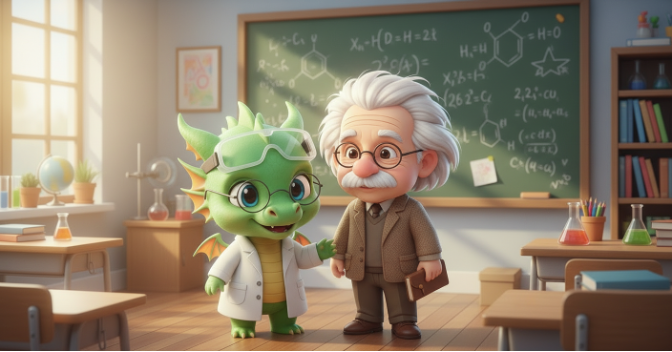
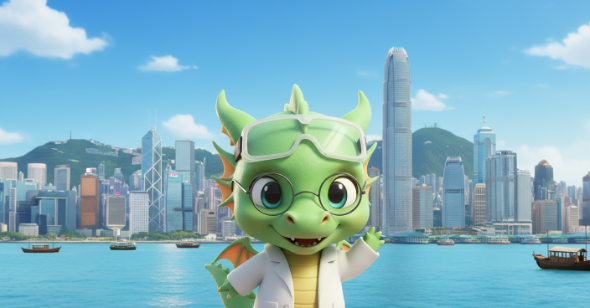
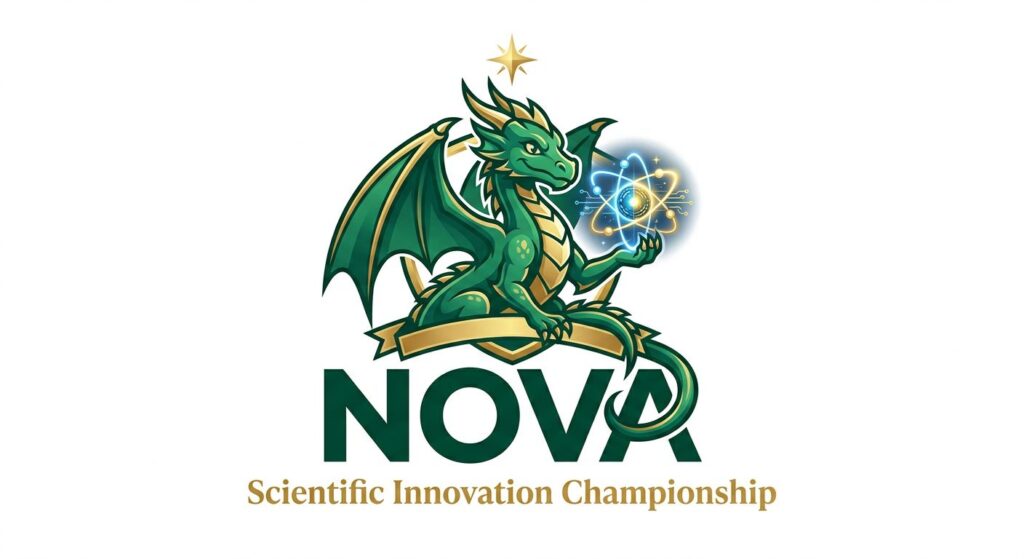
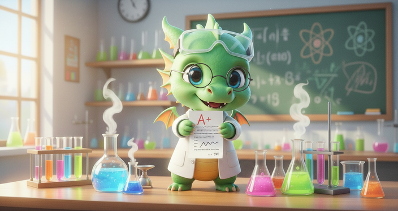
The NOVA Dragon of Science
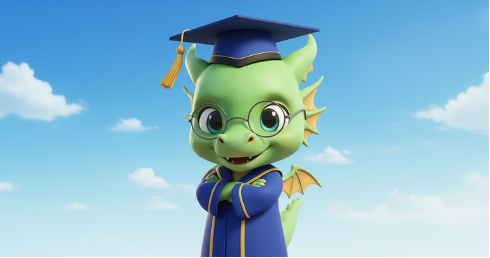
The Green Dragon – Guardian of Scientific Integrity
Among the NOVA Dragons, the Green Dragon represents disciplined curiosity, evidence-based reasoning, and responsible innovation. It guards the luminous atomic sphere, symbolizing unified knowledge across all scientific disciplines.
Personality of the Green Dragon
🔬 Observant and analytical
– sees the hidden mechanics of the natural world.
📊 Evidence-driven
– relies on data and facts to uncover the truth.
🌌 Encourages inquiry
– always asks “why” and explores the unknown universe.
🧬 Ethical and responsible
– upholds the integrity of scientific discovery.
Vision & Philosophy
To ensure the competition aligns with international standards, its format draws inspiration from global curriculum frameworks and frontier scientific themes. This competition aims to uncover students’ multiple intelligences, encourage them to think outside the traditional curriculum, and inspire a profound interest in science.
NOVA is founded upon four guiding principles::
- Fostering Excellence: Setting international benchmarks to encourage participants to achieve the highest levels of scientific proficiency.
- Sharpening the Mind: Systematically training participants’ analytical reasoning, hypothesis testing, and evidence-based deduction.
- Broadening Horizons: Featuring comprehensive problems that connect classical physics and biology to real-world applications like astronomy and bioengineering.
- Bridging to the Future: Simulating the advanced analytical requirements of top international universities and STEM fields.
"Science is not just about memorizing facts. It is the language of inquiry, experimentation, and innovation. It shows us that every phenomenon is a puzzle, and every puzzle can be solved with observation and logic."
The NOVA Dragon of Science
Competition Overview
| Item | Description |
|---|---|
| Competition Name | NOVA Scientific Innovation Championship (NSIC) |
| Duration | 40 Minutes |
| Mode | 20 MCQ |
| Marking Criteria | +1 point for Correct Answer; 0 point for Incorrect Answer; 0 points for Unanswered. Minimum total score is 0 (no negative scores). |
| Assessment Model | Independent Multi-Skill Evaluation |
| Skills Assessed | Observation & Recognition, Conceptual Understanding, Applied Reasoning, Higher-Order / Innovation Thinking |
| Certification Issued | Official Level-Based Certification & Performance Report |
| Advancement Pathway | Eligibility for World Grand Final |
Question Features & Authority:
The competition’s question bank is meticulously designed by a professional academic team. The content covers core curriculum knowledge while incorporating elements of frontier science and logical reasoning. Transitioning from basic observation to complex contextual application (e.g., genetic engineering concepts), the assessment ensures a true reflection of participants’ scientific capabilities.
With questions designed by a team of experienced educators, this engaging and challenging competition aims to help students:
● Discover Multiple Intelligences: Showcase their talents in logic, problem-solving, observation, and creative thinking.
● Support Academic Advancement: Highlight their individual capabilities in mathematics, adding a significant achievement to their academic portfolio.
● Build Confidence and Embrace Challenges: Develop self-assurance and the courage to face challenges while enjoying the process of problem-solving.
Divisions & Assessment Focus
| Division | Target Group | Academic Emphasis |
|---|---|---|
| Kindergarten Division | K2–K3 | Observation and Recognition: ● Life Science: Recognizing basic plants, animals, and human senses. ● Physical World: Floating vs. sinking, basic weather patterns. ● Earth & Space: Day and night, recognizing the moon and stars. |
| Lower Primary Division | Grade 1–2 | Foundational Integrated Science: ● Biology: Basic life cycles, habitats, and living vs. non-living things. ● Physics: Push and pull forces, basic states of matter (solid, liquid, gas). ● Astronomy: The Sun's role, basic planetary recognition. |
| Middle Primary Group | Grade 3-4 | Conceptual Structuring: ● Biology: Ecosystems, food chains, human body systems (introductory). ● Physics: Light and shadows, magnets, basic energy forms. ● Integrated Science: Water cycle, material properties and changes. |
| Upper Primary Group | Grade 5-6 | Analytical Integration: ● Biology & Genetics: Cell structures, introduction to traits and heredity. ● Physics: Electricity and circuits, friction, gravity. ● Astronomy: Solar system mechanics, phases of the moon. ● Bioengineering (Intro): How technology helps nature and human health. |
| Junior Secondary Group | Grade 7-8 | Multi-step Reasoning & Applied Science: ● Physics: Motion, forces, energy conservation, waves. ● Biology: Cellular respiration, human organ systems, genetics basics. ● Chemistry/Integrated: Chemical reactions, atomic structure. ● Astronomy: Stars, galaxies, and space exploration technology. |
| Senior Secondary Group | Grade 9-10 | Innovation and Synthesis: ● Advanced Physics: Thermodynamics, electromagnetism, kinematics. ● Biology & Genetic Engineering: DNA structure, gene editing awareness (CRISPR concepts), evolutionary principles. ● Bioengineering: Biotechnology applications, sustainable engineering. ● Astronomy & Cosmology: Astrophysics concepts, habitability, and space colonization scenarios. |
*Each division reflects age-appropriate linguistic and cognitive expectations.
Certification Framework

| Score Range | Level | Certification Title |
|---|---|---|
| 85–100 | Level 5 | Distinction Certification |
| 70–84 | Level 4 | Advanced Certification |
| 55–69 | Level 3 | Proficiency Certification |
| 40–54 | Level 2 | Developing Certification |
| 0–39 | Level 1 | Foundation Certification |
*Certification reflects demonstrated competence rather than comparative ranking.
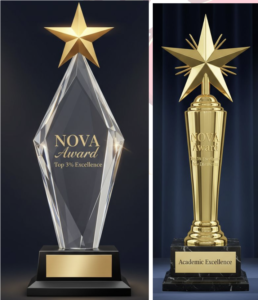
NOVA Award

The NOVA Award represents the highest honour of the competition and is reserved for candidates who demonstrate truly exceptional mastery, advanced proficiency, and distinguished academic excellence.
To be eligible, candidates must:
★ Achieve a minimum overall score of 95 marks or above;
★ Rank within the top 3% of candidates in their respective category;
★ Demonstrate outstanding performance as confirmed by the judging panel;
The decision of the judging panel is final. Recipients of the NOVA Award will receive:
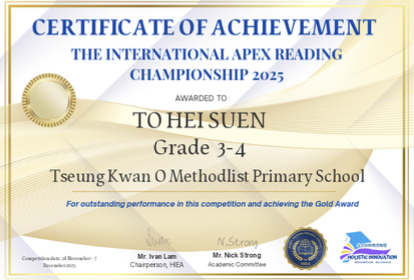
★ A specially designated NOVA Certificate of Honour;
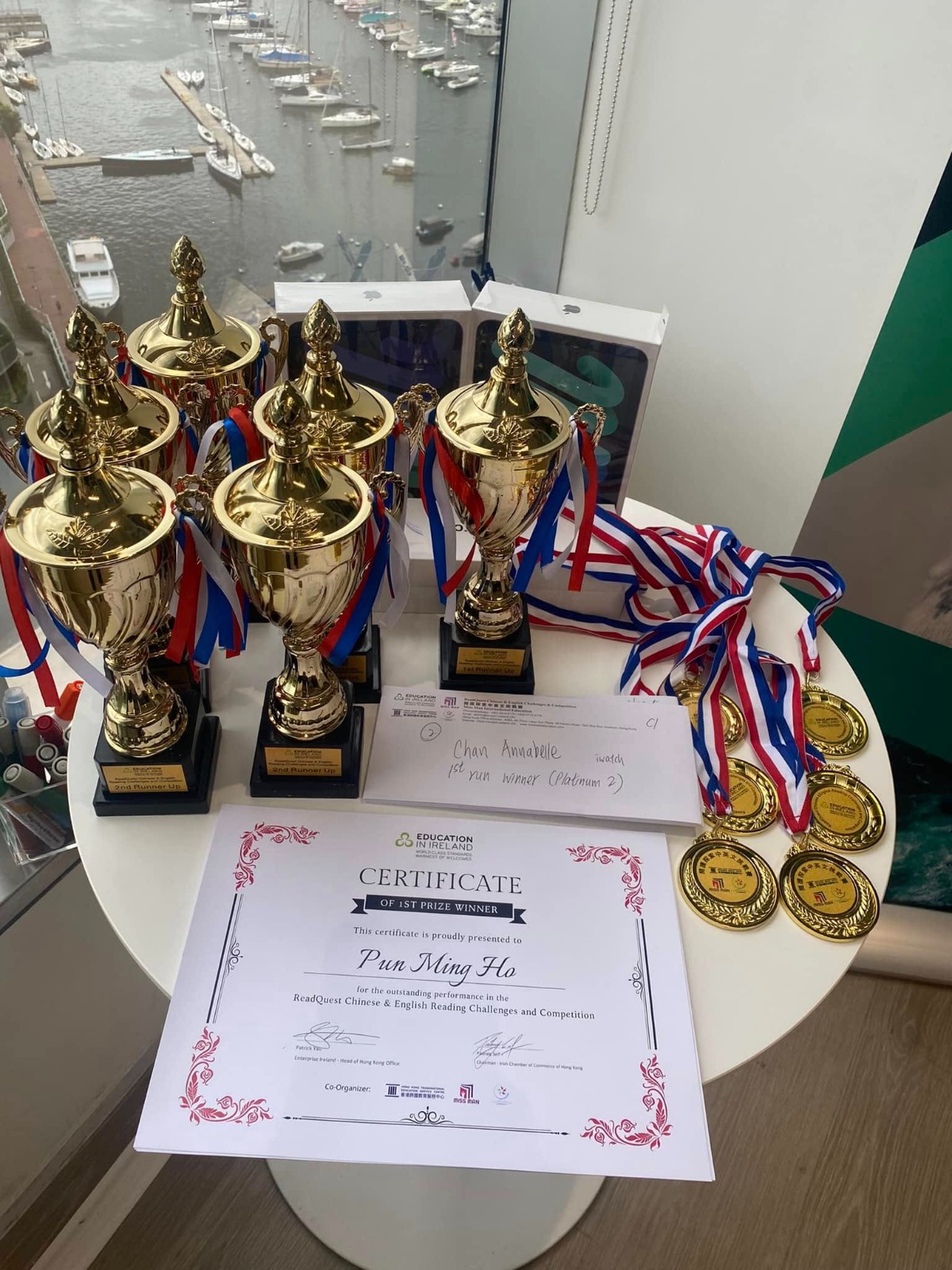
★ A commemorative NOVA Trophy;
★ Formal recognition at the Award Ceremony.
The NOVA Award is a distinction of honour and academic excellence.
Certification & Performance Reporting
In addition to the official Level-Based Certification, each participant will receive a structured Performance Report outlining demonstrated attainment across assessed domains. Certification is accompanied by standardised performance descriptors to ensure transparency and academic clarity. The NOVA Certification Framework ensures that:
• Achievement reflects measurable performance standards
• Feedback is criterion-referenced rather than comparative
• Students receive clear developmental guidance
• Institutions may reference structured skill-level attainment
Level-Based Performance Feedback
| Score Range | Level | Certification Title | Standardised Performance Feedback |
|---|---|---|---|
| 85–100 | Level 5 | Distinction Certification | Demonstrates exceptional mastery of scientific reasoning, advanced analytical depth, and confident cross-disciplinary application. Shows advanced understanding of complex scientific phenomena and innovative thinking. |
| 70–84 | Level 4 | Advanced Certification | Demonstrates strong conceptual understanding and effective application of scientific principles with minor inaccuracies. Experimental logic and problem-solving are well-developed and structured. |
| 55–69 | Level 3 | Proficiency Certification | Demonstrates secure foundational competence and appropriate application of core scientific concepts. Continued development will enhance analytical precision and evidence-based deduction. |
| 40–54 | Level 2 | Developing Certification | Demonstrates basic understanding of scientific concepts with some inconsistencies. Further structured inquiry and practice are recommended to improve logical deduction and factual accuracy. |
| 0–39 | Level 1 | Foundation Certification | Demonstrates emerging understanding of core scientific principles. Focused support and guided exploration are recommended to build foundational knowledge. |
Official Performance Report

Each participant will receive an individualised Performance Report containing:
| Report Component | Description |
|---|---|
| Overall Level | Certified performance band |
| Total Score | Numerical result out of 100 |
| Performance Descriptor | Standardised level statement |
| Developmental Guidance | Recommended focus areas for continued improvement |
The Performance Report is designed to support structured academic progression and reflective learning.
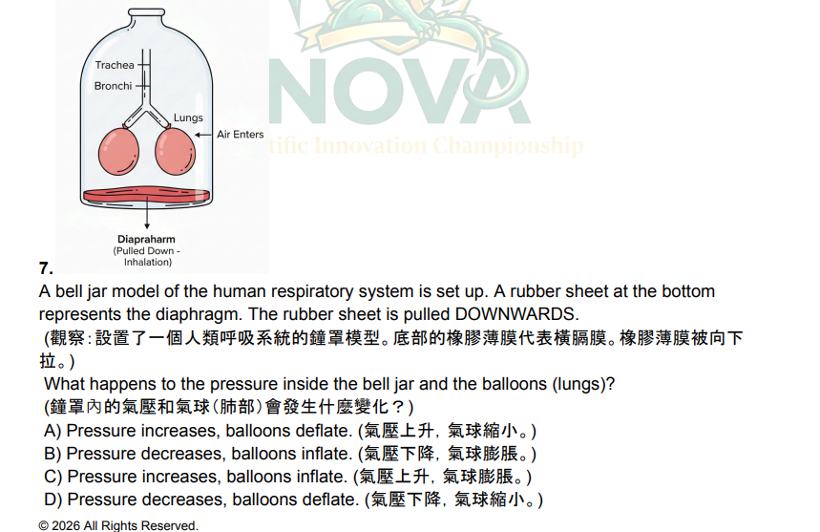
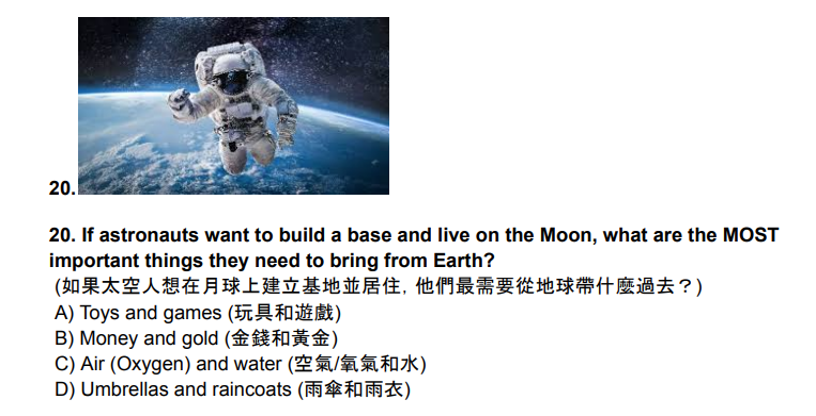
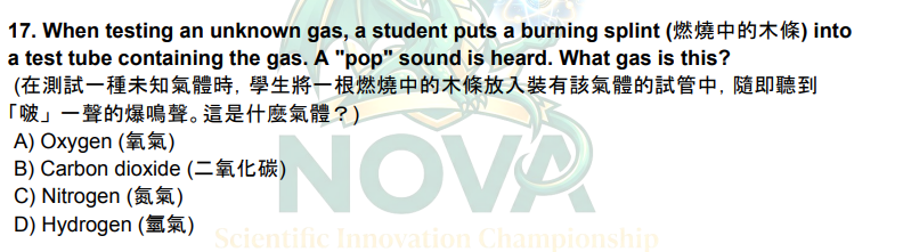
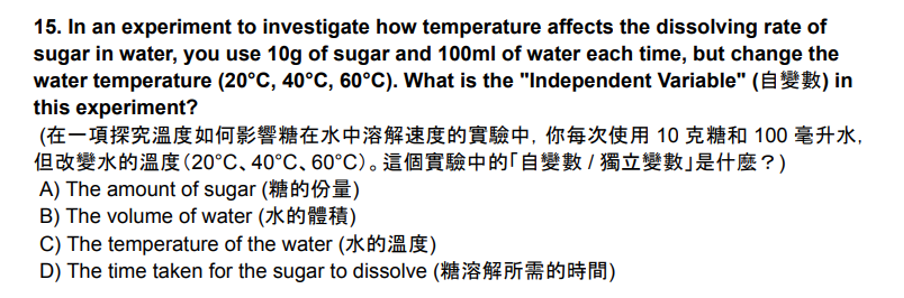
Sample questions
World Grand Final – 2026
| Category | Details |
|---|---|
| Event Title | NOVA Scientific Innovation Academic Grand Final |
| Location | To be confirm |
| Period | To be confirmed |
| Eligibility | Participants achieving Level 3, Level 4 or Level 5 |
| Format | On-site Advanced Academic Assessment |
| Components | Extended Scientific Problem Solving · Experimental Logic · Applied Bioengineering & Physics |
| Recognition | Grand Final Certificate of Academic Excellence |
| Distinction Title | NOVA Elite Scholar |
*The Grand Final represents an advanced stage of academic evaluation designed to identify exemplary language proficiency.
Why NOVA is Different?
Unlike conventional English competitions that emphasize ranking systems or isolated
comprehension testing, NOVA adopts a structured academic certification model.
• Evaluates multiple scientific domains (Physics, Biology, Astronomy, etc.) within a unified framework.
• Introduces frontier themes like Genetic Engineering and Bioengineering progressively.
• Prioritizes mastery and analytical thinking over percentile comparison.
• Provides transparent performance descriptors.
• Aligns assessment design with international academic expectations
NOVA is positioned not as a short-term contest, but as a measurable academic milestone.
Regulations
| Category | Policy |
|---|---|
| Academic Integrity | All assessments must be completed independently. The use of AI tools, translation software, or external assistance is strictly prohibited. |
| Eligibility | Participants must register according to their current academic grade level. |
| Time Control | The assessment is strictly limited to 40 minutes. Automatic submission occurs upon expiration. |
| Technical Responsibility | Participants are responsible for ensuring stable internet access and device functionality. |
| Final Authority | All decisions are subject to the final determination of the NOVA Academic Committee. |
NOVA WORLD CHAMPIONSHIP
- novacompetition@brightfutureacademic.org
- https://brightfutureacademic.org/
- https://www.facebook.com/Novaworldchampionship/
- Phone: AU +61 415 257 812
- Phone: HK +852 59185176
- Australia Address: 459 Elizabeth Street, Surry Hills, Sydney, NSW 2010
- ASIC (Australia) : 1-74748697377
- HK Address: 29/F, Tower 5, The Gateway, 15 Canton Road, Harbour City, Tsim Sha Tsui, Kowloon, Hong Kong
Get in touch
Phone: AU +61 415 257 812
Australia Address: 459 Elizabeth Street, Surry Hills, Sydney, NSW 2010
ASIC (Australia)